The Kawaii Chef: How Cute Doodle Illustrations Transform Visual Content
The world of visual design constantly seeks fresh, engaging styles to capture attention and convey messages with warmth and personality. Among these, the woman chef kawaii doodle illustration stands out as a remarkably versatile and powerful tool. This charming art style, blending super cute aesthetics with playful doodle art, has evolved from a niche trend into a mainstream asset for creators, marketers, and businesses. It represents not just an illustration, but a flexible visual system designed for countless applications, from social media posts to comprehensive branding materials.
Understanding Kawaii Doodle Art Style
To grasp the value of a woman chef illustration in this style, one must first understand its core components. "Kawaii," a Japanese term meaning "cute" or "adorable," refers to a cultural aesthetic that emphasizes innocence, charm, and sweetness. When combined with "doodle art"—a freehand, seemingly simple, and often whimsical drawing style—the result is imagery that feels approachable, friendly, and human. This is distinct from ultra-realistic or corporate vector art. The super cute and doodle style uses soft shapes, expressive minimalist faces, and playful exaggerations (like a chef's oversized hat or a cheerful smile) to create an instant emotional connection.
Common misunderstandings about this style include assuming it's only for children's content or is too simplistic to be professional. In reality, the deliberate simplicity is its strength. It cuts through visual clutter, offering clarity and memorability. In a digital landscape saturated with complex images, a well-crafted kawaii doodle acts as a visual oasis, grabbing focus and fostering positive associations.
The Core Purpose: Versatility in Visual Communication
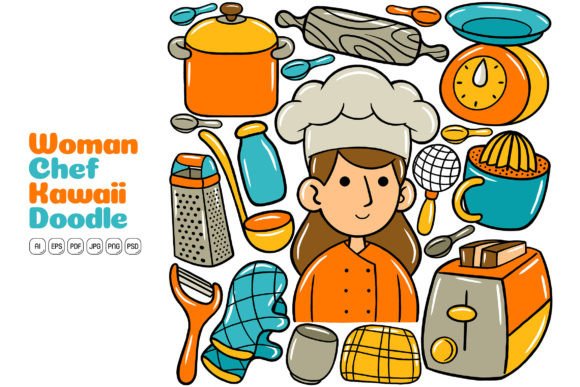
The primary purpose of a dedicated illustration pack, like one featuring a woman chef in this style, is versatility. It is engineered not as a single-use image, but as a foundational component for visual communication. Each element—from the chef's apron to the cooking utensils—is designed to be a building block. This allows you to create countless variations tailored for specific needs. Whether you need an icon for an infographic about healthy eating, a banner for a cooking blog, a mascot for a food startup's landing page, or a sticker for social media, the same core illustration can be adapted seamlessly.
Its significance lies in empowering non-designers and streamlining workflows for professionals. With layered, editable files, the barrier to creating custom visuals lowers dramatically. A bakery owner can now tweak colors to match her brand's palette without hiring a designer. A teacher can create engaging classroom materials about nutrition. This democratization of design is a key part of its modern relevance.
Practical Relevance Across Modern Domains
The application of such illustration assets extends far beyond a single industry. They fit naturally into modern life, work, and creativity wherever visual storytelling is needed.
Business and Marketing
In business, particularly in food, wellness, hospitality, and e-learning sectors, these illustrations serve as powerful branding tools. A kawaii chef doodle can become the friendly face of a brand. Used on websites, she creates an inviting atmosphere. On printed menus or packaging, she adds a unique, artisanal touch. For social media campaigns, her cute aesthetic is highly shareable, increasing engagement in an algorithm-driven environment where personality wins. The ability to resize without quality loss and change colors ensures brand consistency across all platforms—from a tiny Instagram avatar to a large trade show banner.
Education and Infographics
In educational contexts, complex information needs simplification. A cute doodle illustration of a chef can make learning about cooking safety, food groups, or culinary history more approachable for students of all ages. For infographics, these elements break down data into digestible visual chunks. A diagram showing steps in a recipe, using the chef character at each stage, is more effective than text alone. The flat design style ensures clarity, with no distracting shadows or textures pulling focus from the core information.
Personal Creativity and Digital Content
For individual creators, bloggers, and content creators, these assets unlock creative potential. You can combine different elements to illustrate blog posts, design custom merchandise, or create unique digital greetings. The encouragement to "Have Fun Creating" is central. This isn't just about utility; it's about sparking joy in the creation process itself. In daily activities, such illustrations can personalize meal planners, DIY recipe cards, or kitchen decor, blending functionality with aesthetic pleasure.
The Technical Foundations: Why File Format Matters
The promise of easy customization hinges on the technical delivery of the asset. A truly versatile illustration pack provides multiple file formats, each serving a specific purpose.
- Vector Files (AI, EPS, PDF): These are the gold standard for scalability. Vector graphics use mathematical paths, not pixels, so they can be resized from a postage stamp to a billboard without any loss of sharpness. This is crucial for professional printing and adaptable design systems.
- High-Resolution Raster Files (JPG, PNG at 6500x6500 pixels): These pixel-based files offer immense detail for digital use where extreme scaling isn't needed. The PNG with a transparent background is particularly vital for overlaying the illustration seamlessly onto websites, banners, or other designs.
- Editable Layered Files (PSD with Smart Objects): The Photoshop file with layers allows users to hide, show, or adjust individual components. Smart Objects enable non-destructive editing, meaning you can transform elements without permanently altering the original quality.
Compatibility with Adobe Illustrator and Photoshop ensures integration into the most common professional design ecosystems, while the inclusion of user-friendly formats like PDF and JPG makes it accessible to those using simpler software.
Building Your Own Illustrations: The Combinatory Power
Perhaps the most exciting feature is the ability to combine different elements to create your own unique illustrations. Imagine taking the chef character, adding a separate doodle element of a mixing bowl from the pack, placing them on a doodle background of a kitchen counter, and altering all their colors to create a completely new scene. This modular approach turns a single asset into a vast visual library. It encourages users to think like designers, assembling visuals that tell their own specific stories, whether for a website's hero image, a YouTube video thumbnail, or an event flyer.
Fitting into Modern Digital Workflows
In today's fast-paced digital environment, efficiency and adaptability are paramount. An illustration asset that offers high resolution, multiple formats, and easy editing directly addresses these needs. For a social media manager, it means quickly generating a series of cohesive posts for a "Recipe of the Week" campaign. For a web designer, it means implementing a scalable visual that loads quickly and renders perfectly on all devices. For a small business owner, it means having a professional-looking visual identity without ongoing design costs.
The woman chef kawaii doodle illustration, therefore, is more than a picture. It's a design solution. It aligns with the movement towards authentic, human-centric branding and content that values approachability over cold professionalism. It meets the technological demand for assets that are responsive and multi-platform. And it satisfies the creative desire for tools that are both powerful and enjoyable to use.
Conclusion: A Tool for Connection and Creation
From explaining the basics of the kawaii doodle style to exploring its profound practical applications, it's clear that such illustration packs are significant assets. They serve an informational purpose by making complex topics friendly. They serve a commercial purpose by enhancing branding and marketing with memorable visuals. They serve a creative purpose by providing a joyful, customizable medium for personal expression.
By choosing a focused theme like a woman chef, the asset becomes immediately relevant to vast sectors like food, health, education, and lifestyle. Its true power, however, lies in its foundational design—the vector formats, the layered files, the high resolution—that empowers the user to go far beyond the initial image. It invites you to adapt, combine, and color, to make the illustration perfectly fit your project's voice and needs. In doing so, it transforms from a simple download into a long-term partner in visual communication, helping you connect with your audience through the universal language of charm, clarity, and creativity.